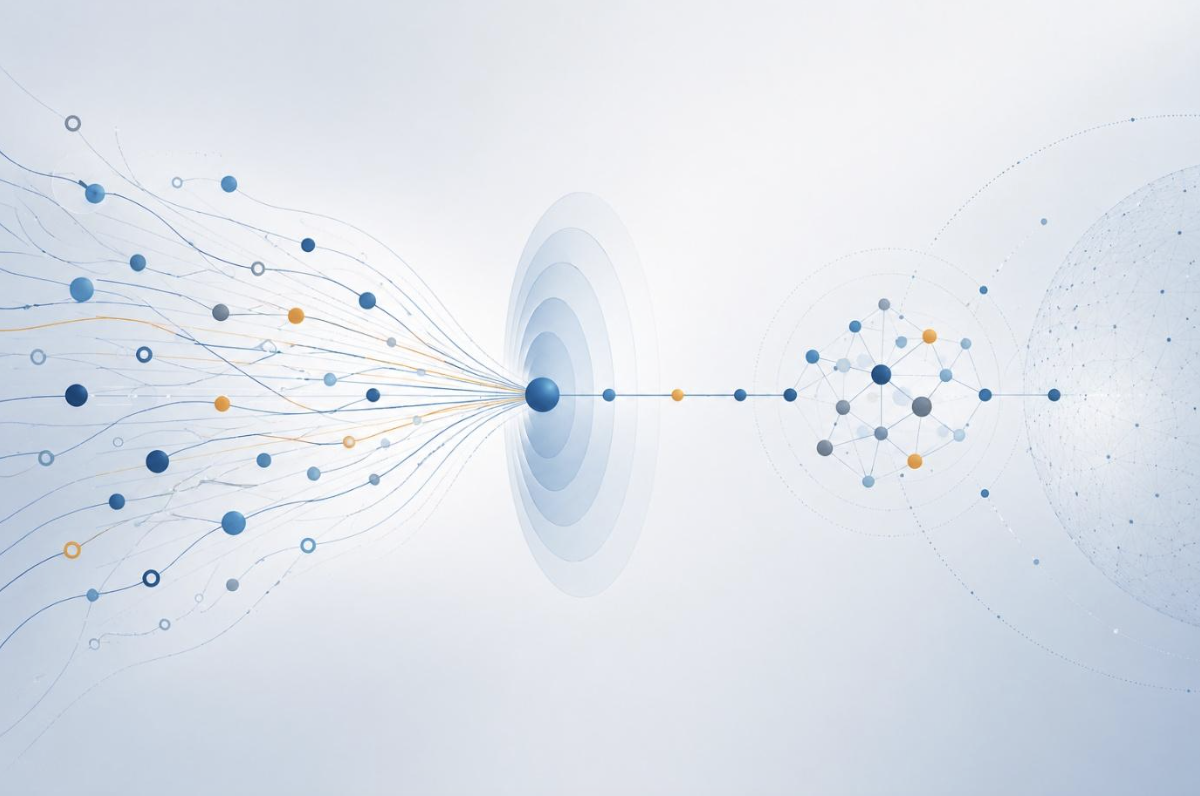



During a recent visit to Nanjing’s Jiangbei New Area Biopharmaceutical Valley, EFEC’s CEO Lily Lin explored how one of China’s fastest-evolving innovation zones is reshaping its approach to translational science and industrial collaboration. What emerges is a case study in how policy, research, and market ecosystems can converge — and what this evolution might mean for future China–UK cooperation in life sciences.

A Policy Engine for Translational Acceleration
Established in 2011 within Nanjing’s Jiangbei New Area, the Biopharmaceutical Valley represents the city’s strategic effort to link academic excellence with industrial execution. It benefits from a dual national designation — as both a National New Area and a Free Trade Zone — which provides unusual flexibility for regulatory innovation, data governance, and cross-border R&D.
This “dual-zone advantage” allows life-science enterprises to accelerate clinical trials, manage data collaboration across borders, and operate advanced manufacturing under more agile conditions. In practice, it functions as a policy engine for translational acceleration — transforming institutional design into industrial momentum
A Full-Chain Innovation Ecosystem
Today, the Valley hosts more than 1,000 enterprises across the biopharma value chain — from gene and cell therapy to drug discovery platforms and advanced manufacturing.
The industrial landscape brings together multiple strengths:The region is home to global contract research leaders such as WuXi AppTec and Pharmablock Sciences ((药石科技) anchor world-class discovery and outsourcing capabilities, as well as locally grown innovators like Geneseeq and Reindeer Medical in the gene and cell therapy sector. Established pharmaceutical companies like Simcere and Luye Pharma have also set up major R&D and manufacturing operations, helping integrate international standards with local execution.
Multiple ecosystem layers interconnect to support this growth:
• Universities and Talent– including Nanjing University, China Pharmaceutical University, and Southeast University – sustain a dense research and talent pipeline.
• Platform empowerment– such as the Peking University Institute of Molecular Medicine (Nanjing) and the Eastern National Health Data Centre – provide shared translational and data resources.
• CXO and manufacturing clusters – link discovery with production, closing the loop from lab to market.
Together, they illustrate China’s emerging “full-chain innovation” model: integrating all stages of discovery, validation, and industrialisation within a coherent regional framework.
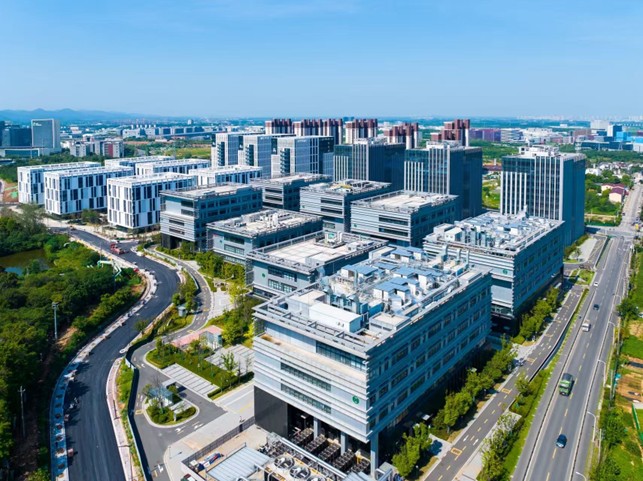
A daytime view of the Biopharmaceutical Valley Campus, showing its intergrated R& D and advanced manufacturing clusters.
From ‘Full’ to ‘Strong’: The Next Frontier
Yet, even amid impressive expansion, the Valley faces the familiar challenges common to any maturing innovation hub worldwide. Original, first-in-class breakthroughs remain limited; competition for global talent and “patient capital” is intense; and dependence on imported reagents and instruments highlights ongoing supply-chain vulnerabilities.
The current agenda focuses on building “strong chains” rather than merely “complete chains” — reinforcing depth, quality, and resilience. This marks a crucial transition from expansion to refinement, from rapid growth to sustainable competitiveness.
Nanjing’s Distinctive Foundations
Nanjing’s innovation drive rests on an exceptional intellectual and cultural base. Historically known as “Tianxia Wenshu” — the cultural capital of learning — the city combines centuries of scholarly heritage with one of China’s most concentrated clusters of modern universities (53 in total).
Its civic ethos — open-minded, honest, and innovation-oriented — aligns closely with the values that shape leading global research cities.
Economically, Nanjing sits at the western edge of the Yangtze River Delta, China’s most dynamic innovation corridor. This geography gives it dual advantages: access to Shanghai’s global networks and a gateway role toward China’s central and western regions.
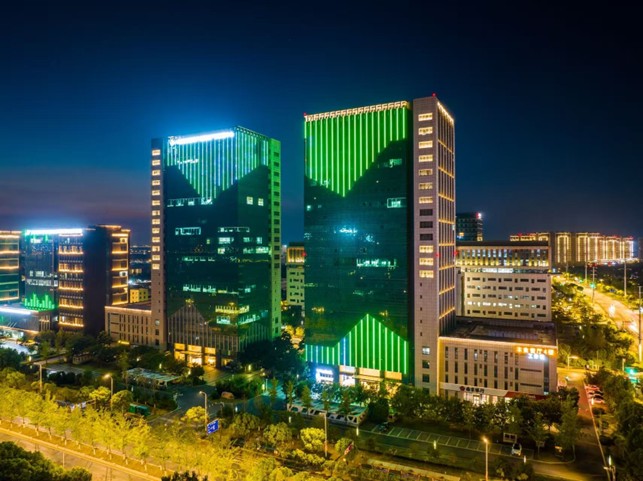
Jiangbei New Area at night, reflecting Nanjing’s modern and evolving innovation environment
Nanjing–Cambridge: A Quiet Continuity of Academic Exchange
Nanjing and Cambridge have maintained a steady relationship grounded in academic exchange and shared research interests. A notable example is the Cambridge University–Nanjing Centre of Technology and Innovation, established in 2019 in Jiangbei New Area. The Centre provides a practical interface for joint research, early-stage innovation projects, and structured knowledge exchange.
Beyond this, universities and research teams in both cities have engaged through workshops, collaborative publications, and thematic research networks across fields such as engineering, digital technologies, and biomedical science. These interactions remain modest but stable, reflecting a quiet, long-term continuity that sits comfortably above day-to-day geopolitical dynamics.
This academic foundation offers useful touchpoints for future cooperation in areas like life sciences, AI-enabled drug discovery, and translational technologies — domains where both sides bring distinct and complementary strengths.
Convergence with UK Strengths
For the Cambridge innovation community, Nanjing’s evolution offers both resonance and contrast.
- Cambridge stands for deep scientific discovery, long-cycle research, and global academic networks.
- Nanjing exemplifies policy-enabled translation, ecosystem orchestration, and industrial scaling.
These positions are not opposites but complementary poles in the global life-sciences value chain. As biopharma enters an era defined by data-driven therapies and cross-border collaboration, the real potential lies in reciprocal capability-building: Cambridge generates the science; Nanjing scales the impact.
A Reflective Outlook
EFEC’s visit to Jiangbei New Area revealed not only a thriving industrial cluster but also a deeper shift — a new stage in China’s innovation governance, where ecosystems are learning to coordinate talent, data, and regulation toward a shared goal of sustainable innovation.
For UK counterparts, this transformation invites reflection: how can long-established research hubs maintain agility and systemic coherence while preserving their independence and values?
As the global life-sciences community seeks new frameworks for collaboration and trust, such dialogues — grounded in mutual respect and informed observation — may prove more valuable than any formal partnership.
Top image: EFEC’s CEO Lily Lin meets colleagues from Nanjing Jiangbei New Area Biopharmaceutical Valley to discuss translational science and ecosystem development.